The Latest

Contribute. We love to hear your thoughts, your musings and your latest work. Please share with us!
Write a post

Setting the Table with Ben Weinlick

Posted by Bronwyn Kent on November 18, 2016

On November 14, Al Etmanski and Vickie Cammack had the pleasure of talking with Ben Weinlick about Setting the Table for Allies, Adversaries, and Strangers for the third part of our IMPACT-Ability Webinar Series.

Read More

Disruptive Innovation: a Type of Upside Down Thinking

Posted by Mark Holmgren on September 19, 2016

Upside Down Thinking has a relationship with Disruptive Thinking and Disruptive Innovation, but they are not merely different descriptors of the same thing. You can read a previous posting I did a while back on Upside Down Thinking; this posting is about Disruptive Innovation.

Disruptive Innovation has its roots in the private sector. The concept was first articulated by Harvard professor, Clayton Christensen in 1995 who defined it as “an innovation [that] transforms an existing market or sector by introducing simplicity, convenience, accessibility, and affordability where complication and high cost are the status quo. Initially, a disruptive innovation is formed in a niche market that may appear unattractive or inconsequential to industry incumbents, but eventually the new product or idea completely redefines the industry.” [1]

Read More

Curiosity and Community

Posted by Cameron Norman on August 5, 2016

Summertime (or weekends) are wonderful times to slow down and take life a little easier and catch up on the news and learn a little more about what is going on in the world. This summer it has been hard not to get discouraged with what's filled many of the front pages and home pages of our favourite news sources. 

Read More

Getting Beyond Better

Posted by Mark Cabaj on July 8, 2016

What can we learn from nearly a hundred inspiring stories – saving rain forests in the Amazon, transforming education in Latin America, reforming public health in middle Africa, and reducing poverty in Bangladesh  about how to create transformative change?

This is the question that Roger Martin, one of Canada’s best known business school leaders and management consultants, and Sally Osberg, President and CEO of the Skoll Foundation, which champions social change efforts around the globe, answer in their book, Getting Beyond Better: How Social Entrepreneurship Works. They also uncover a lot about the frequently referred to, but poorly understood, craft of social entrepreneurship. Here are three of their biggest insights.

Read More

Social Innovation: Lessons for Communities

Posted by Sylvia Cheuy on July 8, 2016

“Disturbers are never popular – nobody ever really loved the alarm clock in action – no matter how grateful they may have been afterwards for its kind service.” - Nellie McClung

Those of us working in communities recognize the need for greater innovation and experimentation if we want to accelerate our ability to advance positive change in neighbourhoods, municipalities and regions.  Whether the focus of our work is: citizen engagement, belonging, community safety, poverty-reduction, housing, or community economic development, there is a growing recognition that wiser and bolder approaches are needed to effectively meet the complex challenges before us.  So, where do we begin?  The robust field of social innovation offers important insights, lessons, patterns and practices to consider.

Read More

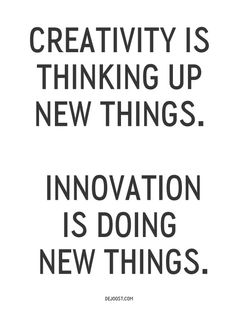
Innovation. What is it?

Posted by Mark Holmgren on June 28, 2016

Innovation.

We all love it, want it, speak it, eat it, and it feels good when something we do is affirmed as innovative by others, especially those we admire. Sometimes, though, and perhaps often, when we don’t hear such affirmations, we create our own. We cite our own work as innovative.

However the recognition of our innovative work manifests, the cynic inside of me does wonder from time to time if our desire to be innovative gives birth to claiming innovation in much of the work we do. That cynic inside of me has wondered the same about me on occasion; just mention that to suggest that my inner cynic has no qualms about digging in on me, what I think, and what I do (and don’t)

What it is?

Read More