
What is program evaluation?
Let’s say you work at a local recreation centre and are tasked with creating an accessible swim program for individuals with a developmental disability. After the first two weeks, you are seeing a steady decline in the number of participants attending. You may ask yourself, “Is this program providing appropriate accommodations for its clients?” “To what extent are current participants feeling engaged with the swim program?” These questions indicate that you should conduct a program evaluation, but where do you start? There are many different types of evaluation; process evaluation is what you want to ensure your program is accessible. These evaluations are important because they give insight into how your program is delivered and whether it is effective. It also allows you to see how your participants are benefiting from your program and if it’s in line with your agency’s goals. You can ask yourself to what extent your program decreases barriers for the participants. To what extent do the participants feel autonomous in your program offering?
A great way to begin is conducting a process evaluation. DeSantis and Kaye (2004) describe a process evaluation as an evaluation that allows major stakeholders to see who is attending the program and what procedures are being implemented to run the program. This method allows practitioners to see who the program is reaching and if changes need to be made to reach those who may require modifications for accessibility.
Current issues in community recreation accessibility
There are many persistent accessibility issues across community recreation programming. Accessibility is a broad term and affects program participants in a wide range of ways. Rivera et al. (2024) discussed several overarching ways in which accessibility is affected in community recreation. For example, community members found that where the program took place greatly affected the accessibility. Issues, such as inadequate parking and facility design, can make it difficult to participate before they have even had the opportunity to join the program. They noted issues with the personnel who were delivering programming. This caused negative situations where staff were not adequately trained to support people with disabilities. Participants also expressed that they often do not feel well-represented in programs and would be more likely to join a program if a facility had accessible hiring practices and employed people with disabilities. Finally, recreation facilities that work with community organizations that promote accessibility were noted by participants to be more accessible.
How evaluation can improve accessibility
Program evaluation is a great starting point in working to make community recreation settings more accessible. Henderson et al. (2017) shared that program evaluation should be used as a response to program could also be used proactively to attain insight prior to problems emerging. Program evaluation allows programs serving individuals with a disability to provide programming that prioritizes accessibility and, in turn, makes the community more accessible for everyone. Process evaluation allows practitioners to gain a clear picture of what is inaccessible about their programs and how it can be modified going forward. Much of the time, programs are developed first, and then accessibility is second. However, it is important to design with the end in mind. When programs are being planned, accessibility considerations should be taken into consideration. By receiving feedback through a program evaluation, you can make decisions and changes that meet participant needs, while also working to attract new ones.
How to make accessibility an evaluation priority
When creating an effective evaluation plan, consider ways to include the opinions of individuals with disabilities in your evaluation process. First, it is important to have adequate representation of individuals living with the relevant disability as part of the evaluation team. Second, it is important to prioritize obtaining information directly from the individual with a disability first, as this gives participants autonomy (Baltzan, 2021). This lived experience expertise, providing insight, will allow for the most accurate assessment of accessibility in your program evaluation. Here are a few examples of accessibility considerations you may wish to consider when carrying out an evaluation:
-
Provide an interpreter
-
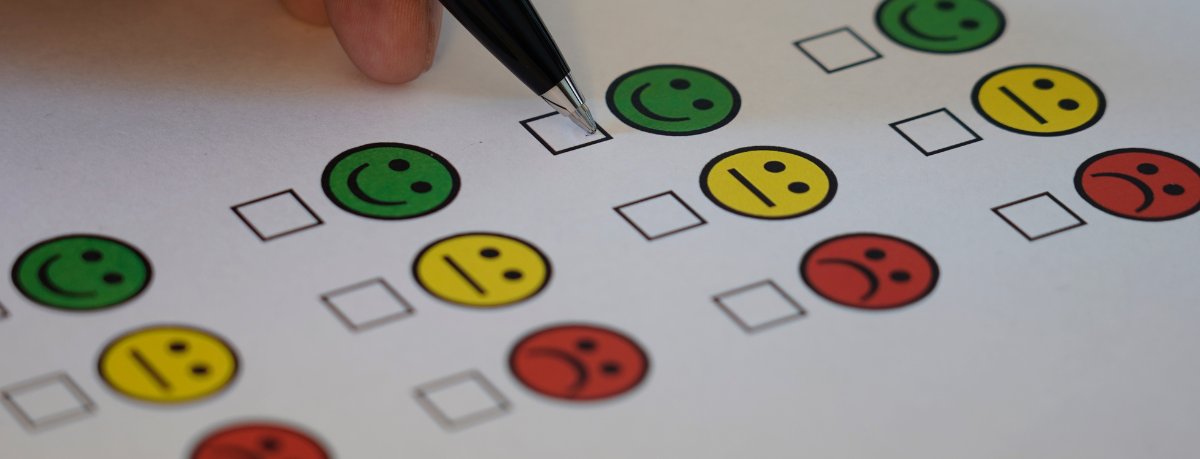
Simplified language in questionnaires
-
Large print questionnaires
-
Use of assistive software to navigate computers and mobile devices (e.g., Screen reader)
-
Presence of a support worker or caregivers, meeting participants where they are at physically (e.g., eliminate barriers to engaging in the evaluation, wheelchair ramp available, digital options available)
-
Flexibility in the timeline or environment to complete the evaluation (Reinholz & Ridgway, 2021)
Conclusion
Accessibility is an ongoing priority that is effectively supported by well-developed programs and managed through insightful and learning-focused evaluations. Accessibility in recreation does more than support existing participants; it also helps attract new ones. This is because people with disabilities like to know that you are willing to work with their needs so they can take part meaningfully. By including individuals with disabilities in the conversation, your business will attract loyal repeat customers and set a community standard for accessibility.