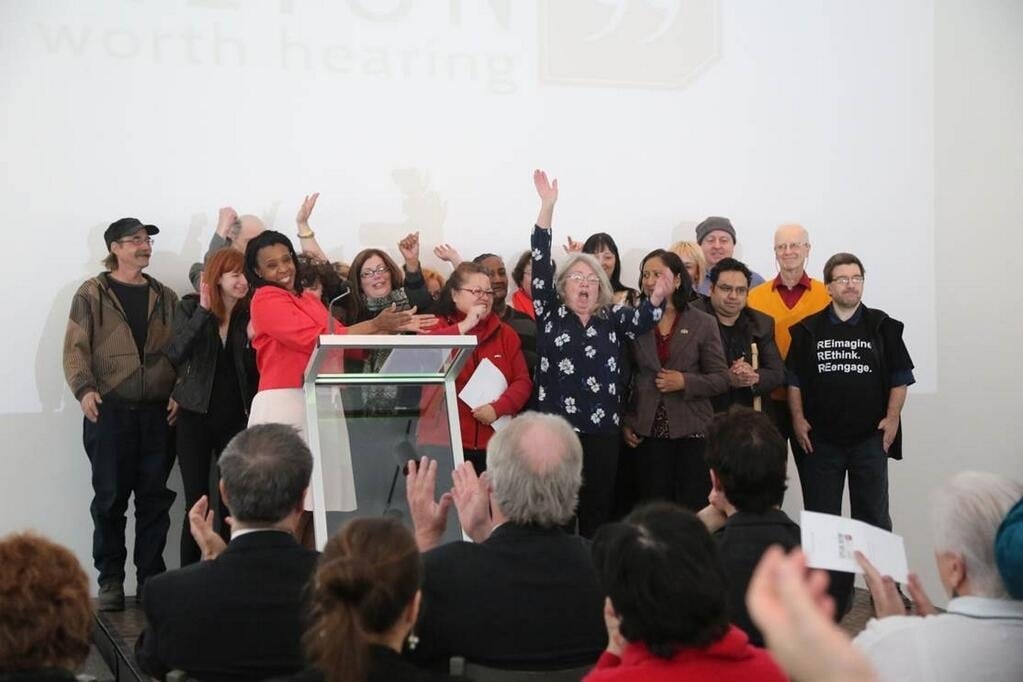

Context: Origins and Partnership with Tamarack
In the early 2000s, Calgary faced rising poverty and homelessness without a unified response. A 2003 City of Calgary report noted that about 12.5% of Calgarians lived below low-income thresholds in 2000, and the 2002 homeless count was 34% higher than in 2000. In response, the question emerged, “What if we could address poverty not at the surface, but at the source?”
This reframing underscored the need for a new approach, one focused on advancing policy change and improving systems and business practices to generate impact at both local and national levels.
In 2002, representatives from United Way of Calgary and Area and Momentum attended Tamarack Institute’s inaugural Vibrant Communities (now Networks for Change) meeting, a national initiative fostering local collaborative action on poverty reduction. Inspired by Tamarack’s framework, these partners co-convened Vibrant Communities Calgary (VCC) as a new platform to unite the community in collaborative poverty-reduction action. VCC was formally incorporated in 2005 as a non-profit and was uniquely structured to focus on advocacy, coordination, and awareness rather than service delivery. This structure, without charitable status but with a funder, enabled VCC to engage in unlimited advocacy on systemic issues.
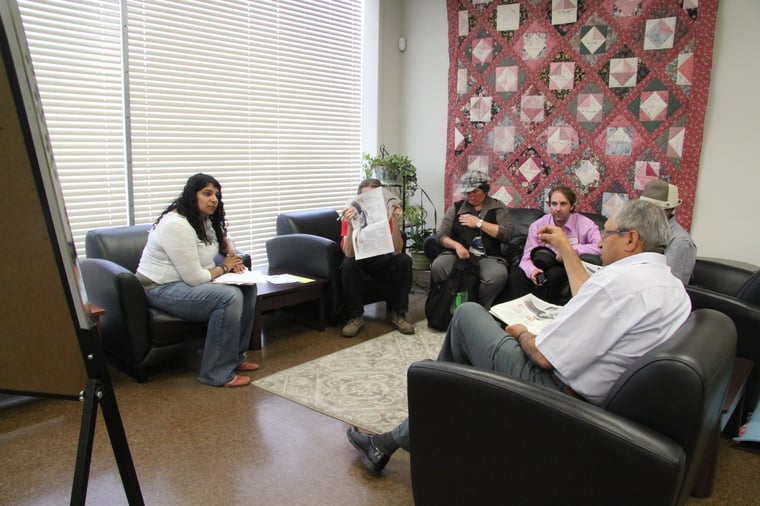
WeACT pre-event workshop in September 2014
In 2011, newly elected Mayor Naheed Nenshi championed the creation of Calgary’s first poverty reduction strategy through the Calgary Poverty Reduction Initiative (CPRI). An 18-month community engagement process involving 18 community working groups, coordinated by an 18-member stewardship group, resulted in the strategy Enough for All (E4A), Calgary’s poverty reduction strategy and one of the first in Alberta. E4A was unanimously adopted by the City Council and United Way Calgary in 2013. By 2015, stewardship of E4A shifted from the City to the community: VCC was selected as the “backbone” steward of the strategy. The transition occurred because the strategy had matured to a point where community ownership, cross‑sector collaboration, and an independent convening body were essential for its next phase - roles well-suited to Vibrant Communities Calgary. Under VCC’s leadership, E4A has been the city’s community-owned strategy to reduce poverty, emphasizing root causes and the voices of lived experience.
In 2019, the City, United Way, VCC and partner, Momentum, renewed a multi-year Memorandum of Agreement to fund and govern E4A’s next phase. The strategy was refreshed as Enough for All 2.0, co-created with input from Indigenous elders and community members, identifying 10 “Levers of Change” to guide poverty reduction.
In 2022, VCC became a civic partner of the City of Calgary, moving from the Memorandum of Agreement to a more traditional funding arrangement with the City and United Way. VCC also separated from its charitable sponsor and fiscal agent, becoming a fully independent agency.
Notably, in 2023, the strategy was honoured with a Blackfoot name, iih kanii tai staiiwa (meaning “everything is there”), symbolizing Indigenous leadership and a holistic vision of well-being. In 2026, VCC is leading a process to refresh Enough for All for a third time, updating the strategy to fit community needs. Through Tamarack’s Vibrant Communities network and local partnerships, VCC has evolved into a catalyst for collaborative poverty reduction in Calgary.
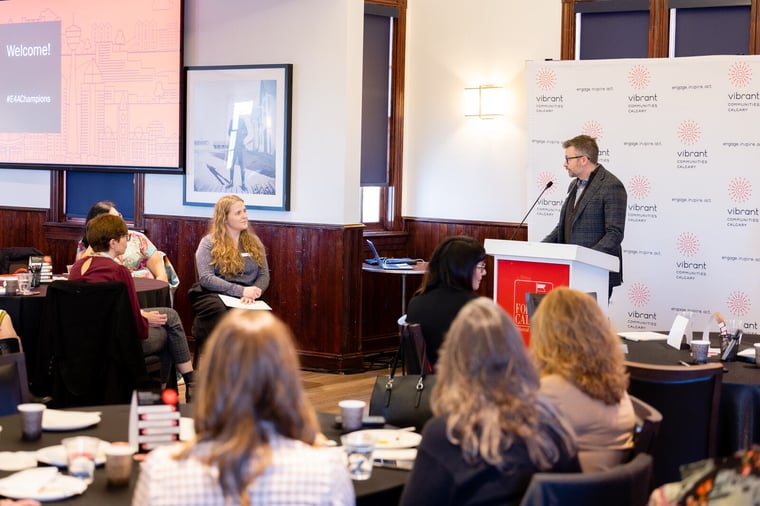
Vibrant Communities Calgary Annual Champion Gathering
Key Changes and Impact Areas
Over two decades, VCC and its partners have driven significant changes across policy, practice, and public awareness in Calgary’s fight against poverty. Key impact areas include:
Income and Employment
VCC championed Calgary’s living wage movement, convening a Living Wage Action Team as early as 2005 to promote the concept. A living wage reflects what people need to earn to cover living costs in their community. While an official citywide living wage policy narrowly failed in council back then, VCC kept the issue alive. In collaboration with the Alberta Living Wage Network, VCC now calculates and annually publishes Calgary's living wage, which for 2024 was $24.45 per hour (about 63% higher than Alberta’s minimum wage). According to the Living Wage Outcomes Harvest, VCC’s work played an important role in establishing a provincial living‑wage movement, increasing the number of businesses paying a living wage in Alberta, strengthening partnerships and policy advocacy, and raising public awareness of the living‑wage concept. VCC’s leadership also contributes to the broader living‑wage movement across Canada, aligning Calgary with national efforts to promote fair wages and reduce working poverty. Calgary's 2025 living wage of $26.50 per hour is over $2 per hour higher than the 2024 living wage. The living wage is now almost 77% higher than Alberta’s minimum wage. Calgarians are paying up to 52% more for transportation, about $1,000 more on childcare, and 6% more for food in 2025.
VCC also produced influential Poverty Costs reports (2013, 2015) that estimated the economic impacts of poverty and recommended policy fixes. These reports offered 71 poverty-reduction recommendations to the province, which included the creation and implementation of the Alberta Child Benefit in 2015 and 2016. Statistics Canada figures show that the child poverty rate in Alberta dropped by 50% between 2015 and 2017, from 10% to 5%. Later combined with an enhanced federal child benefit, this contributed to a 30% reduction in Alberta’s child poverty rate between 2015 and 2020. VCC also advocated indexing provincial income supports (such as AISH and Income Support) to inflation; in late 2022, the Alberta government announced it would resume inflation-indexation of AISH and Income Support from January 2023.
Transportation
Vibrant Communities Calgary played a central role in bringing the Low‑Income Transit Pass (LITP) to life, helping design and implement a program that improves mobility and economic participation for thousands of Calgarians. The pass now offers discounts of 50%, 65%, and 95% off the regular adult monthly fare, making it one of the most progressive transit‑affordability programs in Canada. Since its launch, VCC has continued to champion the LITP through persistent, evidence‑based advocacy that has secured funding and protected the program during multiple budget cycles. The 2024 evaluation of Enough of All highlights this impact clearly: funding for the Low‑Income Transit Pass was restored within 24 hours following strong advocacy from VCC and its partners. This rapid response demonstrates VCC’s effectiveness in safeguarding essential affordability measures and ensuring that low‑income Calgarians continue to have reliable access to transit—maintaining affordable, reliable transportation as a cornerstone of Calgary’s poverty‑reduction strategy.
Affordable Housing
VCC has played an instrumental role in advancing affordable housing policy in Calgary. It collaborated with the City Council on a multi-year campaign to legalize secondary suites (basement apartments) in the city’s single-family zones. This effort succeeded in 2018 when the City Council voted to permit secondary suites more broadly, removing a major barrier to increasing affordable rental stock. The City also launched a Secondary Suite Registry and incentive program, and by late 2024, Calgary reached a milestone of 16,000 registered secondary suites, each representing a safe, legal home for a family or individual in need. VCC also convened and supported the Community Housing Affordability Collective (CHAC) and other partners to push for solutions. In 2021–2022, VCC helped coordinate community input for the City’s Housing and Affordability Task Force; all its recommendations were ultimately adopted by Council with VCC’s advocacy noted as a driving force. These changes expanded affordable housing options and influenced broader strategies (e.g. Calgary’s 2024 Home is Here housing strategy) aimed at tackling the housing crisis. More recently, VCC has played a key role in advocating for the passing, funding, and implementation of the City of Calgary’s Home is Here strategy, offering vocal support and rallying its partners to do the same.
“As a social worker, housing and income seem to be in a record crisis. Even people with jobs can barely afford to pay rent for themselves. It is nearly impossible for a person on income support to afford rent at this time, and the wait lists for subsidized housing are years and years of waiting, even for seniors. Solutions to make housing more affordable are in dire need.”
Financial Empowerment
Calgary was the first city in Canada to develop a city-wide financial empowerment collaborative. In 2015, VCC, United Way, the City of Calgary, Momentum, and other partners launched the Financial Empowerment Collaborative as part of Enough for All. A few years later, the initiative was rebranded as Aspire – The Financial Empowerment Collaborative, reflecting its evolution and growing impact.
This initiative brought together more than 25 organizations to help low‑income Calgarians build assets, reduce debt, and access essential benefits. Over the years, Aspire partners have supported thousands of tax filings—critical for unlocking government credits and benefits—and provided financial coaching, savings programs, and matched‑savings opportunities. In 2024 alone, the collaborative helped 15,000 Calgarians living on lower incomes reduce debt, increase savings, and strengthen their financial stability, and facilitated approximately $5 million in tax refunds for more than 13,000 residents. Notably, 90% of the tax filers supported through Aspire had been in Canada for less than two years.
Waters of Systems Change: Shifting Policies, Practices and Perceptions
VCC’s systems change work aligns with the six “conditions” of Waters of Systems Change, often referenced by Tamarack and FSG: policy, practice, resource flows, relationships, power, and mental models. Calgary’s experience shows that progress on all these fronts, not just program outcomes, is necessary for lasting equity.
Policies
VCC has championed numerous policy and systems innovations at multiple levels of government that reduce barriers for people living in poverty. Provincially, the creation of the Alberta Child Benefit (2015) and the indexing of income assistance (2022) addressed structural gaps in the social safety net. VCC also contributed to the development of broader strategies, for example, informing the City’s Affordable Housing Strategy and the federal government’s poverty reduction strategy by providing local research and data (Poverty Costs, No Place to Go) and a community-based perspective.
Preventing homelessness is significantly more cost-effective than managing it. In May 2025, VCC released a Policy Brief on the Homelessness Income Cut-Off (HICO), highlighting the gap between current social assistance rates and the income needed to avoid homelessness. According to the HICO, a family of four in Calgary requires at least $42,582 annually, while a single adult needs $18,392 to maintain stable housing. The brief urges policymakers to use this data-informed benchmark to evaluate and adjust social assistance programs as a proactive strategy to reduce homelessness, especially amid rising shelter and food costs.
Notably, VCC advocated for the City’s creation of Fair Entry, a streamlined single application for all City subsidized programs (transit passes, recreation, etc.). This one-stop access point made it easier for low-income residents to get support. In parallel, VCC and community allies (like the Fair Calgary Community Voices (FCCV) successfully pushed for a sliding-scale Low-Income Transit Pass, where the less one earns, the less they pay for transit. The Low Income Transit Pass gives people living on a low income the opportunity to find and keep jobs, attend school, make medical appointments, and stay connected to the community. It was initially piloted in 2005 and made permanent in 2008, and became the most affordable transit program in Canada for those in deep poverty. VCC’s commitment to the past has continued. In 2024, when the provincial government announced plans to cut funding, VCC and community partners mobilized quickly—speaking to media, engaging decision‑makers, and rallying public support. The decision was reversed within 24 hours, underscoring VCC’s ongoing role in protecting the program. By 2017, Calgary’s low-income pass (now $5.30/month for the lowest income bracket) was purchased by over 48,000 people, and ridership tripled (from <200,000 to >300,000 passes) in one year. This model has since inspired similar programs in other cities, showcasing Calgary as a leader in equitable transit access.
VCC has also continually pressed for broader social policy changes - from advocating updates to predatory lending regulations and social assistance rates, to supporting the indexing of Assured Income for the Severely Handicapped (AISH) and other benefits to cost of living. Many of these reforms, though led by various partners and governments, were informed by research and advocacy that VCC helped coordinate (often under the banner of the Calgary Social Policy Collaborative). Embedding poverty reduction goals into official policy has ensured a more sustainable, far-reaching impact than any single program.
Practices
VCC has modelled new ways for institutions and communities to work together. One pivotal practice change is the inclusion of lived‑experience leadership in decision‑making. Early on, VCC supported Poverty Talks!—a civic‑engagement group led by people with lived experience of poverty—and ensured that those voices were at the table in strategy development. Lived experience informs all of VCC’s work, from research and policy advocacy to community engagement and awareness building. VCC also produced a podcast called Let’s Talk Poverty that helps individuals understand poverty in Calgary through the lens of Enough for All. It tackles the stigma surrounding poverty, challenging biases and assumptions. Ten new episodes were released in 2025. Additionally, VCC has used social media, newsletters, and media engagement to elevate public awareness of poverty in Calgary and spotlight viable solutions. In 2025, the website saw over 43,000 users engage with its content and generated more than 104,600 page views, serving as a key platform for publishing VCC’s latest research and policy recommendations. That same year, social‑media content reached an active audience of more than 20,000 followers and subscribers, while the monthly newsletter consistently engaged over 2,000 readers. VCC’s work was also featured in more than 370 media stories, helping to inform public dialogue and mobilize support for key poverty‑reduction efforts
VCC also established an Indigenous Advisory Committee (IAC) to guide Enough for All, incorporating Indigenous worldviews, oral‑storytelling traditions, and practices such as smudging and on‑the‑land learning into the work. These approaches helped shift organizational habits toward greater inclusion, equity, and respect for multiple ways of knowing. At the end of 2023, VCC officially sunset the IAC, moving Enough for All into a new phase of action on truth and reconciliation. This transition reflects the hard work and commitment of the IAC and marks a shift from building awareness toward encouraging VCC and E4A Champions to lead their own truth and reconciliation efforts through partnerships, trust‑building, and long‑term relationships. This change strengthens the sustainability of the work, as organizations are better positioned to develop and maintain their own strategies and relationships. VCC continues to offer Indigenous workshops and learning opportunities, build strong relationships with Elders and Indigenous community members, and advance truth and reconciliation across the network.
Additionally, VCC has fostered a strong practice of cross‑sector collaboration through action teams and the Champion network, making it routine for nonprofits, businesses, and government partners to co‑create solutions rather than operate in isolation. Internally, VCC’s own processes—such as how it shares data and conducts community consultations—emphasize transparency and continuous learning. Regular Reports to the Community, community events, and public evaluation updates have further reinforced transparency and shared ownership, setting an example that has influenced partner organizations’ practices as well.
Resource Flows
By design, VCC altered the flow of resources – money, knowledge, and people – in Calgary’s poverty reduction system. The long-term funding commitments from the City and United Way (totalling ~$1.5 million annually) created a stable backbone to coordinate efforts. VCC channelled these funds into backbone functions (research, community engagement, advocacy) that were previously under-resourced. The formation of the Champion Network further diversified resource flows – member organizations contribute expertise, data, and outreach capacity aligned with E4A’s goals. Knowledge flows have improved through VCC’s role as a convener: data from universities, government, and community programs is now shared more freely via initiatives like the YYC Data Society Community Datahub and the Well-Being Dashboard. Human capital has also been mobilized differently; VCC’s convenings have effectively redistributed “who works on poverty” beyond traditional social agencies to include business leaders, academics, and people with lived/living experience. These shifts in resources, financial and non-financial, have increased the community’s capacity to address poverty systemically.
Relationships & Connections
A hallmark of VCC’s work is weaving stronger relationships across sectors and communities. Before VCC, efforts were siloed—non-profits, government departments, and businesses often worked in parallel or at cross‑purposes. VCC intentionally created cross‑sector coalitions such as the Financial Empowerment Collaborative, the Social Policy Collaborative, and the Community Housing Affordability Collective to bridge these divides. The Social Policy Collaborative, in particular, has become a cornerstone of VCC’s approach, bringing together leaders from social service agencies to collectively resource policy advocacy. The SPC provides a non-partisan platform for the human services sector to bring a clear and collective voice to government to advance policy opportunities that address the most pressing challenges faced by vulnerable Albertans. This collaborative policy advocacy is a major reason VCC has been effective at driving systemic change, strengthening relationships while aligning partners around common priorities.
Regular community roundtables, multi‑partner task forces, and shared advocacy efforts have built trust among actors who previously had little interaction. As a result, Calgary now benefits from a networked infrastructure where information and ideas circulate more quickly, and partnerships form more readily. One example is how VCC and the University of Calgary’s School of Public Policy jointly highlighted the issue of the “near homeless” 40,000 households at risk of homelessness, leading to a unified call for preventive measures like rent supplements and income support. Another example is VCC’s work with Calgary’s business community: the Calgary Chamber of Commerce became one of the first in Canada to endorse a living wage, reflecting relationships VCC nurtured between advocates and employers.
In 2019, E4A 2.0 introduced a Champion Network model, inviting organizations across sectors to become “Enough for All Champions” committed to the strategy’s goals. By the end of 2025, 76 Champions—ranging from businesses and nonprofits to educational institutions—had signed on, pledging to align their work with the strategy and uphold shared principles such as dignity and inclusion. This broad coalition has broken down silos and nurtured a city-wide community of practice. Furthermore, in 2024 and 2025, VCC built on and strengthened research relationships at the University of Calgary across disciplines and departments, including the Cumming School of Medicine, the Health Equity Hub, the O'Brien Institute for Public Health, the Centre for Health Policy, the W21C Research and Innovation Centre, the Health Policy Trials Unit, the Institutes for Transdisciplinary Scholarship, and the School of Architecture, Planning and Design. These connections, including non-traditional allies like the private sector and media, have reduced duplication, sparked innovation, and enabled a more coordinated community response to emerging challenges.Power Dynamics
VCC’s inclusive approach has subtly shifted power dynamics in Calgary’s social sector. Traditionally, agenda-setting power often resided with funders or large institutions; VCC has redistributed some of that power to community voices. The inclusion of Indigenous Elders and people with lived experience in governance roles has elevated perspectives that were historically marginalized. For instance, in 2023, the E4A strategy was gifted the Blackfoot name “iih kanii tai staiiwa” meaning “everything is there”, a meaningful act that reflects VCC’s commitment to walking alongside Indigenous partners and honouring Indigenous ways of knowing within poverty reduction work.
In 2025, VCC engaged over 5,000 Calgarians to shape the Your Voice, Our Future report and the Municipal Election Platform, ensuring lived experience directly influenced civic priorities. These platforms, grounded in community input and the What We Heard report, shifted power by making space for citizens, especially those historically excluded, to co-author policy conversations alongside institutional leaders.
Furthermore, VCC’s role as a backbone organization has been to convene and facilitate rather than command and control, which has levelled the playing field among stakeholders. Power is shared through collaborative committees and the Champion Network rather than a top-down hierarchy. Over time, this has empowered smaller agencies and grassroots groups to have a voice in city-wide strategies. The shift is evident in how poverty reduction is discussed—it is no longer the domain of a few charity CEOs or city officials, but a broad-based conversation where community members can challenge or co-create with traditional power-holders.
Mental Models
Changing how Calgarians perceive poverty has been central to VCC’s mission. In 2016, VCC launched a Calgary Foundation-funded public awareness campaign to shine a light on poverty in the city. This evolved into Challenge Poverty YYC (2018), a campaign pairing influential Calgarians (business leaders, bloggers, media personalities) with people who have lived experience of poverty. Through videos, blogs, and a “$7-a-day” challenge, these partnerships humanized poverty and challenged stereotypes, fostering greater empathy among the public.
In 2023, the Unaford Campaign further expanded this work by spotlighting the growing affordability crisis facing Calgarians. Through bold visuals, clear messaging, and real stories from community members, the campaign illustrated how rising costs in housing, food, transportation, and childcare are pushing more people into financial precarity. By framing affordability as a systemic issue rather than an individual failure, the campaign deepened public understanding of the structural drivers of poverty and reinforced the urgency of coordinated policy action.
VCC’s research reports, such as Poverty Costs and Beneath the Surface: Calgary Well-Being Report (2023), reframed poverty in economic and holistic terms. Beneath the Surface looked beyond income to examine nine domains of well-being (health, education, housing, etc.), reinforcing that poverty is multi-dimensional and solvable through systemic change. The report also led to sector-wide agreement on shared poverty metrics and informed the development of the Enough for All Well‑Being Dashboard, which continues to be updated as a tool for tracking Calgary’s progress toward its poverty‑reduction goals. VCC has integrated these findings into media stories (over the years, VCC has garnered thousands of media mentions, op-eds, and interviews, keeping poverty in the news). The messaging consistently emphasizes that reducingpoverty is both morally right and pragmatic for society, rather than a charitable gesture – echoing Nelson Mandela’s assertion that “overcoming poverty is not a gesture of charity, it is an act of justice”. By coupling data with human stories, like those shared on the Let’s Talk Poverty podcast and in community dialogues, VCC is gradually shifting public perceptions. The old mental model that poverty is inevitable or solely an individual issue is giving way to a new understanding: that poverty is a systemic problem which can be addressed through justice-oriented solutions and collective effort. Changing these mental models is foundational for sustaining political and public support to truly end poverty.
Advancing Leadership
Over time, VCC has evolved its collaborative leadership to meet the scale of the challenge. In the early years, VCC focused on building readiness by raising awareness, convening initial partners, and researching solutions. As the initiative matured (especially after adopting E4A), it shifted to mobilizing community-wide action, engaging a much broader coalition in implementation. Several developments illustrate this advancing leadership:
Collective Leadership and Strategy
VCC’s role as convener ensured that leadership was not concentrated in one organization but distributed.
VCC deliberately broadened its leadership circle. The formation of the multi‑party stewardship group in 2015 meant that municipal government, non‑profit, and community leaders shared accountability for the poverty‑reduction strategy. VCC’s role as convener ensured that leadership was not concentrated in one organization but distributed across the network. The refresh of the strategy in 2018 included extensive consultations with Indigenous leaders and people with lived experience, embedding their perspectives into the strategic goals. This inclusive process strengthened the strategy and cultivated new leaders; for example, participants from the Indigenous and lived‑experience advisory committees emerged as Champions and public advocates for the cause. The updated E4A 2.0 strategy explicitly calls for “all hands on deck” and identifies Champions across sectors, effectively institutionalizing a collaborative leadership model.
At the same time, VCC’s role has evolved in ways that complement and reinforce the collective‑impact approach. While collective action depends on shared leadership, many partners face constraints—limited time, capacity, resources, or concerns about funding—that make it difficult for them to take on visible leadership roles. VCC’s unique structure allows it to step forward when needed, particularly in the years following COVID‑19. This has enabled VCC to provide steady, proactive leadership while still anchoring its work in collaboration, shared accountability, and the principles of collective impact.Community Engagement and Public Will
VCC recognized that broad community buy-in was needed to drive policy and system changes. It thus invested in innovative engagement methods to bring more voices into the work. One example is Creating Enough for All Futures, which convened over 160 residents in facilitated workshops to re-imagine solutions for issues like food security and housing. VCC also frequently engages the public through surveys, town halls, and its media platforms. This ongoing dialogue with the community has two effects: it educates and galvanizes the public, and it grounds the leadership in the real experiences and priorities of Calgarians. The sustained public interest (e.g. citizens participating in End Poverty Month events or following VCC’s social media for poverty facts) creates a supportive environment for leaders to take bold action. In essence, VCC has helped cultivate a constituency for poverty reduction in Calgary, which is a powerful asset when advocating to government or funders.
Governance and Policy Influence
VCC’s leadership also extends to policy advocacy at various tables. VCC and champions have taken leadership roles in external policy forums: for example, co-chairing the Calgary Social Policy Collaborative (which unites leaders from multiple social-serving agencies to collaborate on joint policy advocacy), and providing evidence or briefs to government on areas including living wage, housing, and income supports. The credibility earned through years of relationship building has given VCC a respected voice with the government and community. Internally, VCC’s board governance has evolved to reflect a collective leadership ethos as well: the board aims to include cross-sector representation (non-profit executives, business, academia, Indigenous leaders, etc.) and focuses on strategic direction and relationship-building rather than program oversight. This governance style models the collaborative leadership approach the whole initiative embodies. Notably, when leadership transitions occur, the partnerships stay strong, illustrating that the leadership bench is broad and resilient. New leaders bring fresh energy while recommitting to the shared vision.
Advancing Priority Domains of Work
While VCC’s mandate is to reduce poverty, it has placed special focus on certain domains to drive change. Three notable domains where significant progress and innovation have occurred are: Reconciliation & Equity, Public Awareness & Measurement, and Financial Empowerment.
Reconciliation and Anti-Racism
VCC has integrated Indigenous perspectives and anti-racist principles into its poverty reduction work, recognizing that colonization and systemic racism are root causes of inequity. An Indigenous Advisory Committee was established to guide Enough for All, ensuring the strategy incorporates both Indigenous and Western worldviews. Elders and Knowledge Keepers have been involved in VCC events and planning, opening meetings with blessings and sharing teachings on community and reciprocity. This influence is evident in VCC’s practices, such as emphasizing oral storytelling and relational approaches as valid forms of knowledge alongside written reports. In 2023, these efforts culminated in E4A receiving a traditional Blackfoot name iih kanii tai staiiwa (“everything is there”). The naming was a profound acknowledgement of the strategy’s alignment with Indigenous values of collective well-being and balance. It also signified a transfer of power: Indigenous leaders formally blessing and giving identity to a community strategy. Additionally, Enough for All 2.0 explicitly integrated equity and anti-racism as cross-cutting themes in its 10 levers of change. This has led to actions like supporting urban Indigenous housing solutions, advocating for anti-racist policy (e.g. input into Calgary’s Anti-Racism Action Committee), and ensuring disaggregated data is used in tracking poverty to illuminate racial disparities. By embedding reconciliation into its core, VCC has modelled decolonization in action - showing respect, reciprocity, and inclusion at every step. This focus not only benefits Indigenous Calgarians (who face disproportionately higher poverty rates), but also strengthens the entire movement by rooting it in values of justice and respect. Calgary’s example has been cited in the Vibrant Communities network as a leading practice for how poverty reduction initiatives can also advance Truth and Reconciliation Commission calls to action at the community level.
Public Awareness and Measurement
Financial Empowerment
Beyond the initial establishment of the Aspire Financial Empowerment Collaborative, VCC has continued to push the envelope in the financial empowerment domain. Over the years, the focus has expanded from direct service delivery (like financial coaching or tax clinics) to systemic financial inclusion. VCC and its partners have advocated policy changes such as fair banking practices and regulation of predatory lending. For example, Calgary was among the first cities to limit the locations and operations of payday lenders, a move the Roundtable supported as part of its anti-poverty strategy. The Aspire collaboration, now led by Momentum, achieved notable outcomes: low-income Calgarians accessed millions of dollars in tax refunds and benefits through community tax clinics, and hundreds opened new savings accounts or participated in matched savings programs. VCC has used these successes to make the case to the government that boosting incomes through benefit uptake and reducing debt are effective poverty reduction tools. Consequently, initiatives like the Canada Learning Bond (education savings for low-income kids) see higher uptake in Calgary due to these collaborative efforts. Another innovation is VCC’s work on the living wage at a policy and employer level. By calculating and publishing Calgary’s living wage annually (and revealing the gap between minimum wage and a true living wage), VCC has spurred dialogue about wage policy and corporate responsibility. It helped convene the Certified Living Wage Employer Program, which recognizes employers who pay a living wage, and nearly 50 Calgary employers have signed on by 2024. This both directly raises incomes for workers and creates a public narrative that wages must keep up with costs. VCC also contributes to provincial and national conversations on basic income, income support reform, and employment insurance improvements, often drawing on data and stories from Calgary to illustrate the need for change. By tracking outcomes like total consumer debt loads or the proportion of Calgarians who have at least three months of emergency savings (a metric of financial resiliency), VCC can show whether financial empowerment efforts are making systemic dents. The emphasis in this domain has increasingly been on upstream solutions: for instance, advocating financial literacy curriculum in schools, pushing for lower-cost banking options for low-income households, and supporting social enterprise development. All these strategies aim to reduce the likelihood of people falling into poverty due to financial shocks. Calgary’s pioneering work in financial empowerment has been shared through Tamarack’s national Vibrant Communities network, inspiring similar collaborations in other cities (e.g. Winnipeg’s SEED program or Toronto’s financial empowerment initiatives).
“ I live under the poverty line, have struggled to find any form of employment, and am unable to afford most housing in the city, so social empowerment, housing, and income support are very important to me.”
Local Factors for Success
Several interconnected local conditions enabled Calgary’s poverty reduction efforts led by VCC to take root and endure. From the outset, key institutions shared a clear, unified vision of addressing the root causes of poverty. The formal partnership between the City of Calgary, United Way, Momentum, and VCC under the E4A strategy created a stable governance structure with clearly defined, complementary roles. This alignment helped insulate the work from political and economic shifts. Strong political leadership further legitimized poverty reduction as a non-partisan, city-wide priority tied to Calgary’s long-term economic and social health. Equally important was the presence of stable funding and operational infrastructure. Consistent multi-year funding from the City and United Way Calgary allowed VCC to build internal capacity, invest in research, and sustain momentum over time. Momentum’s role as fiscal sponsor provided administrative stability, while Calgary’s strong nonprofit ecosystem and existing collaborative culture, bolstered by institutions such as the Calgary Homeless Foundation, enabled coordinated implementation across sectors. Investments in shared data infrastructure, including the Community Data Hub, further strengthened collective action.

Vibrant Community Calgary in Community
Local philanthropy and private-sector engagement also played a critical enabling role. Organizations such as the Calgary Foundation supported public awareness and systems-change approaches, while corporate partners and financial institutions, such as First Calgary Financial (now Servus Credit Union), supported VCC’s work, seeing it as aligned with their community values, reinforcing the initiative’s legitimacy and reach. The integration of Indigenous principles also shaped the initiative in meaningful ways. Grounded in Calgary’s Treaty 7 context, VCC adopted relational, culturally respectful practices that improved trust, outreach, and inclusion, particularly for Indigenous communities disproportionately affected by poverty. Indigenous worldviews expanded how well-being and abundance were understood, enriching the strategy’s moral and practical foundations.
Finally, local economic cycles and crises shaped Calgary’s journey, and the initiative’s resilience in navigating them has been a factor in its success. The 2014 oil price crash and subsequent recession hit Calgary hard, increasing unemployment and demand for services. As VCC had built a collaborative network, the city was able to respond in a coordinated way (e.g. social agencies, guided by the strategy, scaled efforts for those affected by layoffs). During the COVID-19 pandemic, Calgary’s poverty strategy provided a ready framework for rapid response – whether it was disseminating information on emergency benefits in multiple languages, ensuring transit remained affordable for essential low-wage workers, or rallying donations for urgent needs. The ability to adapt the strategy to these shocks (for instance, adding a focus on digital access when schooling and services went online) kept it relevant. Community trust in VCC as a convener meant it could quickly gather stakeholders to address new challenges. Each crisis also reinforced to local leaders and the public why a systemic approach to poverty (one that builds resilience) is crucial. This understanding further entrenched support for VCC’s long-term work. Together, strong cross-sector governance, stable funding, engaged philanthropy, data-driven decision-making, cultural inclusivity, and adaptability to local conditions created fertile ground for Calgary’s poverty reduction efforts to flourish.
Tamarack’s Contribution and National Context
The collaboration between VCC and the Tamarack Institute has been foundational to Calgary’s success. Tamarack Institute, through its Vibrant Communities Canada program, provided the initial framework and inspiration that led to VCC’s creation in 2002. As a national convenor, Tamarack introduced the Cities Reducing Poverty (now, Communities Ending Poverty) model, emphasizing multi-sector collaboration and measurable poverty reduction, which Calgary eagerly adopted. VCC was one of the early members of this national network of cities, benefiting from Tamarack’s coaching, tools, and peer learning opportunities. For example, Tamarack’s guidance on the collective impact approach informed how VCC structured itself as a backbone and how it developed shared measurements. Regular communities of practice calls and annual summits hosted by Tamarack allowed Calgary’s team to exchange ideas with cities like Hamilton, Toronto, and Edmonton, accelerating innovation. Lessons from elsewhere (such as Hamilton’s experience with a living wage campaign or Toronto’s housing-first approaches) could be adapted to Calgary’s context through these knowledge exchanges.

A group of participants at Tamarack's 2015 Poverty Reduction Summit in Calgary.
Tamarack also helped document and evaluate Calgary’s progress. In 2018, Tamarack published a case study on E4A, highlighting Calgary’s progress and challenges, which validated the work and identified areas for growth. The national recognition helped maintain local momentum and attract additional partners. Furthermore, Tamarack’s Evaluation Frameworks and Systems Change tools (like the “Waters of Systems Change” model and Community Innovation indicators) were utilized by VCC to analyze and communicate its impact on deeper systemic conditions. This gave VCC and its stakeholders a common language and rigour for discussing change beyond program outputs, reinforcing the focus on policy, relationships, and mental models. Beyond intellectual contributions, Tamarack’s public policy advocacy at the federal level (e.g. contributing to Canada’s Poverty Reduction Strategy development) dovetailed with local advocacy by VCC, creating a multi-level push for action. For instance, when Tamarack and national partners advanced the idea of a federal poverty line and target, VCC could localize that conversation in Calgary, leading City Council to formally endorse poverty reduction targets in alignment with the national strategy.
In essence, Tamarack served as an incubator and amplifier. It incubated VCC by providing the initial spark and methodology, and it amplified VCC’s work by showcasing it nationally and connecting it to a movement of dozens of cities. The sense of being part of a broader national effort helped Calgary’s leaders and residents see their work as transformative and reinforced the belief that ending poverty is possible (by learning from success stories elsewhere). Tamarack’s Vibrant Communities network now includes over 80 cities, and Calgary’s experience has been both informed by and informative to that network. The journey of VCC stands as a flagship example of Tamarack’s model in action, demonstrating the power of place-based, community-driven change.
Lessons Learned
After 20 years, Calgary’s poverty reduction collaborative has accumulated a wealth of insights. Key lessons learned include:
Stay the Course with Partnerships
Long-term, cross-sector partnerships are vital to weather political and economic shifts. Change doesn’t happen overnight. The united front of the City, United Way, Momentum, Tamarack Institute and other business and community partners must be maintained over the long haul. Calgary learned to institutionalize relationships (through MOUs, champion networks, etc.) so that the work transcends individual leaders or election cycles. A consistent partnership can withstand setbacks and capitalize on windows of opportunity when they arise.
Balance Bold Advocacy with Solid Evidence
VCC embraced an advocacy role, but grounding its asks in credible data and economic analysis was crucial to be taken seriously by decision-makers. The Poverty Costs report is a prime example; it framed advocacy in terms of cost savings and return on investment. The lesson is to pair the heart with the head: compelling human stories and moral arguments backed by rigorous research and facts. This combination builds a broad coalition of support, including pragmatic allies who might not respond to moral appeals alone.
Centre Lived Experience
The voice and presence of people who experience poverty must be at the centre of solutions. Calgary’s journey underscored that engaging people with lived experience (through initiatives like Poverty Talks, advisory committees, peer researchers, etc.) is not just tokenism but essential for legitimacy and designing effective interventions. Lived experience leaders kept the work grounded in reality, challenged assumptions, and also became the most powerful advocates to sway public opinion. However, it’s important to support these community leaders (with training, honoraria, and trauma-informed practices) so that participation is empowering and not exploitative.
Integrate Indigenous Wisdom and Build Trust
Embracing Indigenous ways of knowing and striving to decolonize the work has been transformational. It taught Calgary the importance of relationships over transactions. Outcomes improved when trust was built – whether trust with Indigenous communities, or trust between social agencies and government. Practices such as smudging, sharing circles, and learning Indigenous histories were not ancillary to the work, but foundational to carrying it out with integrity. These practices helped address power imbalances and strengthened the strategy by embedding principles of collective well-being and reciprocity. A related lesson is to confront racism and systemic barriers openly as part of poverty reduction, rather than treating them as separate issues.
Leverage Storytelling to Shift Mindsets
Calgary found that data alone doesn’t change minds; stories do. Narrative change is a form of systems change. By investing in communications, whether via campaigns, podcasts, or media outreach, VCC was able to reframe public discourse on poverty from charity to justice, from individual blame to collective responsibility. The lesson is that changing mental models requires ongoing effort to tell new stories that capture the public imagination. Celebrating small wins publicly, humanizing the issue, and using accessible language (instead of jargon) all helped bring more people along. In short, how the issue is talked about determines how much support it gets. Consistent, values-based messaging creates an environment where policy change becomes possible.
Embrace Adaptation and Continuous Learning
Over two decades, contexts will change - economies boom or bust, governments come and go, pandemics hit. Calgary’s initiative showed the importance of being flexible and responsive. Strategies were updated (e.g. Enough for All 2.0) when needed, and new issues like the gig economy or mental health impacts of poverty were incorporated as learning evolved. Learning culture, with regular reflection, community feedback, and evaluation, allowed the work to improve rather than become stale. This also meant not getting discouraged by setbacks; when a promising policy was rolled back (e.g. benefit indexation in 2019), VCC treated it as a temporary setback and persisted, eventually seeing it reinstated. The path to systems change is nonlinear, and resilience and adaptability are key qualities for those leading the effort. These lessons from Calgary can inform other communities: build enduring partnerships, use evidence boldly, put people at the center, honour Indigenous and local knowledge, change the narrative, and stay adaptive. Collectively, they point to an approach that is both principled and pragmatic in pursuit of a complex goal.
Ripples of Impact Beyond Calgary
VCC’s work has generated ripple effects that extend well beyond the city, shaping national conversations and influencing how other communities approach poverty reduction. What began as a locally grounded initiative has contributed to broader shifts in policy, practice, and public discourse across Canada.
One of the clearest impacts has been Calgary’s influence on other cities pursuing coordinated, place-based approaches to poverty reduction. Through Tamarack’s Cities Reducing Poverty network, Calgary’s collective impact model, anchored by a backbone organization and a shared community strategy, has been widely studied and adapted. Communities such as Winnipeg, Regina, and Halifax have drawn on Calgary’s experience, often citing E4A as an early template. Calgary’s leadership in initiatives like the living wage and low-income transit pass further reinforced its role as a practical example, with cities including Edmonton and Ottawa implementing similar transit subsidy programs. VCC also helped shift the economic narrative around poverty. Its Poverty Costs research reframed poverty as not only a social issue but a significant economic one, prompting policymakers to ask not whether poverty reduction was affordable, but whether inaction was. This framing has since been adopted in federal and provincial policy discussions, including Canada’s national poverty reduction strategy, contributing to a broader understanding of poverty reduction as a long-term social and economic investment.

Locally, VCC played a key role in normalizing poverty as a central civic issue. Once minimized in public dialogue, poverty is now a routine topic in media, political debate, and community engagement in Calgary. Consistent media outreach and data-driven commentary increased public awareness and support for action, with poverty and inclusive growth now commonly addressed by civic leaders, educators, and business groups. Calgary’s policy innovations have also informed efforts elsewhere. Initiatives such as the sliding-scale transit pass and the Fair Entry system demonstrated the feasibility of more integrated, income-responsive service models, influencing experimentation in other municipalities. Advocacy for indexed income supports and regulatory reforms to expand secondary suites similarly informed provincial and national discussions. Rather than offering prescriptive solutions, Calgary’s experience provided transferable lessons, shared openly through networks like Tamarack, that expanded the national poverty reduction toolkit.
Finally, VCC’s emphasis on equity, reconciliation, and lived experience left a lasting institutional imprint. The inclusion of Indigenous leadership and equity language in Enough for All influenced local policies, including the City of Calgary’s Social Wellbeing Policy and the 2024 Housing Strategy, Home is Here, which reflects VCC’s data and equity-focused approach. This represents a deeper systems-level shift toward addressing structural inequities, not only alleviating poverty. Taken together, these ripple effects show that while VCC’s mandate was local, its influence has been national. By shaping practice, reframing narratives, and embedding equity into policy conversations, VCC has contributed meaningfully to a broader movement for inclusive prosperity, one that continues to guide communities striving for “enough for all.”
Next Steps and Conclusion
As VCC celebrates two decades of impact, its mission remains as urgent as ever: to reduce poverty by keeping it top of mind, help evolve systems, and keep the community at the centre of this work. Calgary has not yet ended poverty – significant challenges like an affordability crisis, a rise in food insecurity, and gaps in mental health support persist. However, the foundation built is strong. Going forward, VCC and its partners are charting the next chapter of E4A. This involves a strategic refresh for 2026 and beyond, setting new targets and priorities based on current realities (for example, responding to the post-pandemic landscape and the city’s growth). The Well-Being Dashboard and reports like Beneath the Surface will guide these adjustments by highlighting where needs are greatest.
One focus will be to deepen systems transformation: moving upstream to address not only the symptoms of poverty but the structural drivers. That could mean continued advocacy for living wages and basic income guarantees, further integration of services to prevent people from falling through cracks and pushing for more affordable housing supply via innovative models. Another focus is sustaining and expanding the inclusion of voices – ensuring youth, Indigenous, immigrant, and other communities facing unique barriers are leading solutions that affect them. Crucially, VCC plans to nurture the next generation of leaders and champions. Many of the original architects of Calgary’s strategy (in government and community) have retired or moved on; the mantle is being passed to new hands, and VCC will invest in capacity-building to equip new champions to drive the work with the same passion and knowledge.
Finally, VCC will continue to emphasize that poverty reduction is everyone’s business. The call is out for more champions – whether they are businesses adopting equity hiring practices, faith groups supporting affordable housing, or neighbourhood associations creating inclusive communities. The ethos is that enough for all will only be achieved when all contribute.
In conclusion, the story of VCC illustrates that complex issues like poverty can be tackled through sustained, collaborative effort that marries vision with pragmatism. From its Tamarack-inspired beginnings to its current role as a community backbone, VCC has shown the power of convening diverse players around a common agenda. Calgary has moved the needle in meaningful ways: thousands have better incomes, better access to services, and a stronger voice in the community as a result of these efforts. Equally important, Calgary has changed the conversation, proving that poverty is not an inevitable fact of life, but a problem that can be solved through justice-minded action. As the initiative moves into its next phase, it does so grounded in two decades of learning and fueled by a community that increasingly believes in the vision of a city where there is “enough for all.”