Introduction
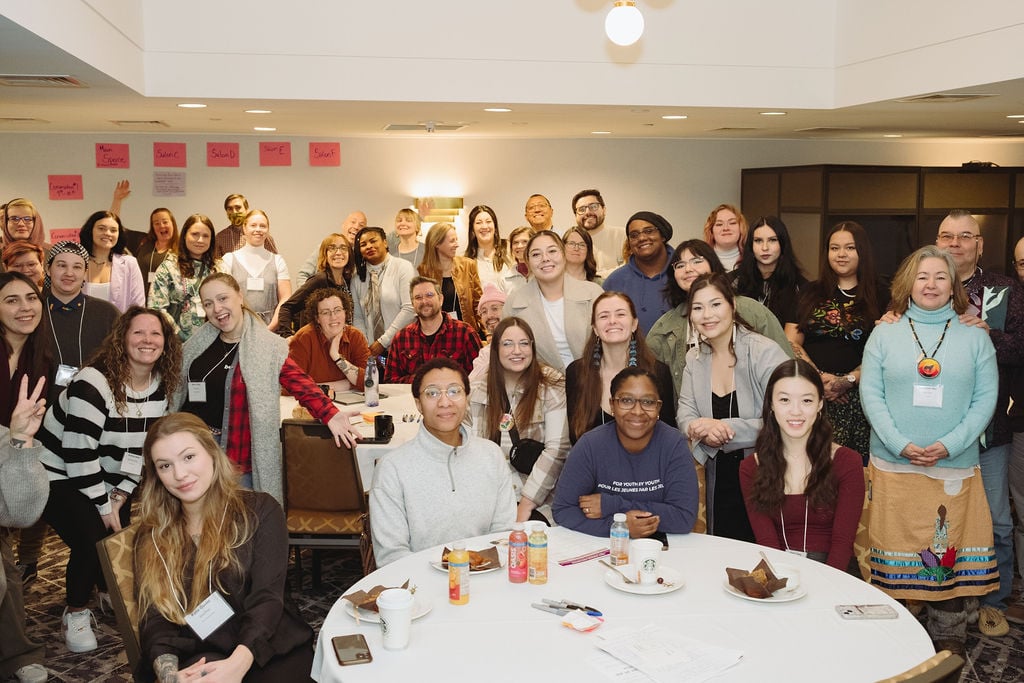
Collaboration is both the heart of community change and one of its most persistent challenges, and in the Adaptive and Resilient Communities Cohort (ARCC), we explored how collectives can strengthen their work by intentionally embracing conflict as a natural, even generative, part of collective efforts, in a session co-hosted with the ARCC and the Emergency Preparedness cohorts, and facilitated by Yas Hassen, Associate Director – Skills for Change at Tamarack.The goal was to gain a deeper understanding of how relationships, power, and transformative conflict practices shape the health of a collaboration. Rather than treating conflict as a barrier, we explored how transformative conflict practices can help us:
-
Build collective accountability
-
Evaluate our collaboration and course correct along the way
-
Handle and transform conflict as it emerges
-
Strengthen trust and relational infrastructure
-
Recognize how identity, social location, and power shape collaboration
Why This Conversation Matters
Community change work asks us to navigate uncertainty, complexity, and competing priorities. Tensions often arise between mandates, organizations, people, and even within us. Relationships are central to surviving climate emergencies, which can amplify existing and new conflicts, as well as add layers of stress and erode resiliency.
As the session reminded us, conflict is part of growth, and how we manage conflict in complex times can support the resilience and strength of our communities in the face of escalating climate challenges. Remembering it’s not WHAT, but WHO is in your emergency toolkit, can help us build back better after climate events that impact our communities. Together, we explored how to build the skills needed to collaborate with care and reciprocity.
Reciprocity and Relational Accountability
We began by grounding ourselves in a reminder that collaboration is not just technical but deeply relational. As author Robin Wall Kimmerer emphasizes in her book Braiding Sweetgrass, reciprocity and responsibility are key to collaboration: “Know the ways of the ones who take care of you, so that you may take care of them.” The principles of the Honourable Harvest highlight our work as changemakers – collaboration relies on how we show up for one another, how we honour what is given, and how we sustain the relationships that sustain our work.
Building Collective Accountability
Clarity in roles, expectations, and agreements helps prevent tension and support alignment. Accountability is essential to building trust in transformative conflict.
Evaluating Collaboration in Real Time
Rather than waiting until issues become escalated, collaborative evaluation helps partnerships check in frequently, adjust processes, redistribute responsibilities and recommit to shared purpose. Continuous evaluation can help us pivot sooner and realign with authenticity, trust and transparency.
Addressing and Transforming Conflict
Using a relational and transformative lens, we were challenged to examine how conflict appears at multiple levels and how to navigate it constructively. A transformative approach to conflict can help teams move beyond “resolving” conflict to transforming the conditions that create it.
Exploring Our Assumptions About Conflict
Reflecting on our own assumptions about conflict – Is conflict dangerous? Inefficient? Emotional? Cultural? – We named where and how conflict shows up: internally, interpersonally, organizationally, and systemically. Our identities and social locations shape not only how we experience conflict but how we are “allowed” to respond to it.
The Thomas-Kilmann Conflict Model helps us build awareness of our default responses to conflict and the contexts in which each approach is useful or limiting.
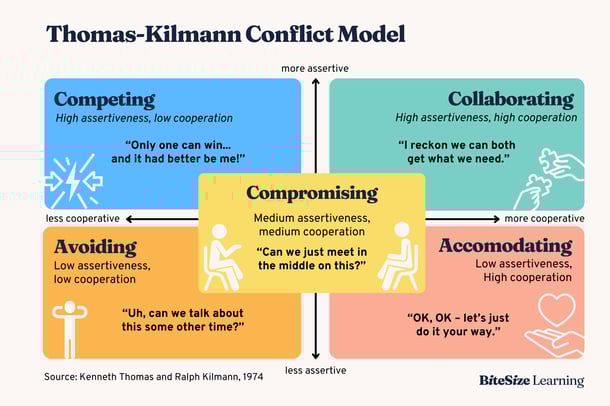
A diagram of the Thomas-Kilmann Conflict model from the BiteSize Learning
Participants mapped where conflict arises in their work, how they respond to it, and how power, identity, and communication shape those moments.
Communication Isn’t Neutral
Communication is an expression of power and positionality, particularly evident in moments of rupture. Even basic communication norms reflect underlying power structures: determining who gets to speak first, who is frequently interrupted, which stories are deemed "on topic," and who is disproportionately expected to hold emotions or maintain peace within conversations.
These patterns reveal both a reflection and reinforcement of existing power relationships. Recognizing and disrupting these dynamics helps collaborations avoid reinforcing inequities and instead co-create shared norms that invite all voices in.
Moving Towards a Transformative Conflict Practice
A transformative approach shifts our thinking from asking “How do we fix this disagreement?” to asking:
-
What is the harm, misunderstanding, or need beneath the conflict?
-
What relationships or structures need attention?
-
Where is power showing up in ways that may be invisible?
-
What possibilities emerge when we approach conflict with curiosity rather than defensiveness?
There are three mindset shifts essential for transformation:
-
Seeing beyond the immediate issue
-
Balancing short-term responses with long-term change
-
Shifting from either/or thinking to both/and possibilities
Conflict can reveal deeper structural issues. Collaboration evaluation tools can help teams realign their work towards a shared purpose, while conflict transformation approaches open space to rebuild and repair trust.
Building a Resilient Collaboration for the Future
As communities tackle complex challenges, ranging from poverty to climate resilience and emergency preparedness, collaboration must be both strong and adaptable. Governance and role structures give us clarity; evaluation gives us feedback and the ability to course correct; and transformative conflict practice gives us the relational foundation to sustain long-term change. Ultimately, good governance + real-time evaluation + relational conflict practices = a resilient collaboration.
This session reminded us that conflict is not a failure of collaboration. It is an invitation to listen more deeply, to adjust more honestly, and to build more equitably.
Learn More:
-
View the Accountability Matrix Tool
-
View the Monitoring Collaboration Tool
-
Learn about the Adaptive and Resilient Communities Cohort
-
Join the Community Role in Emergency Preparedness Community of Practice