Who Defends & Why? Rethinking Defence Through Community Partnership and resilience
10:20
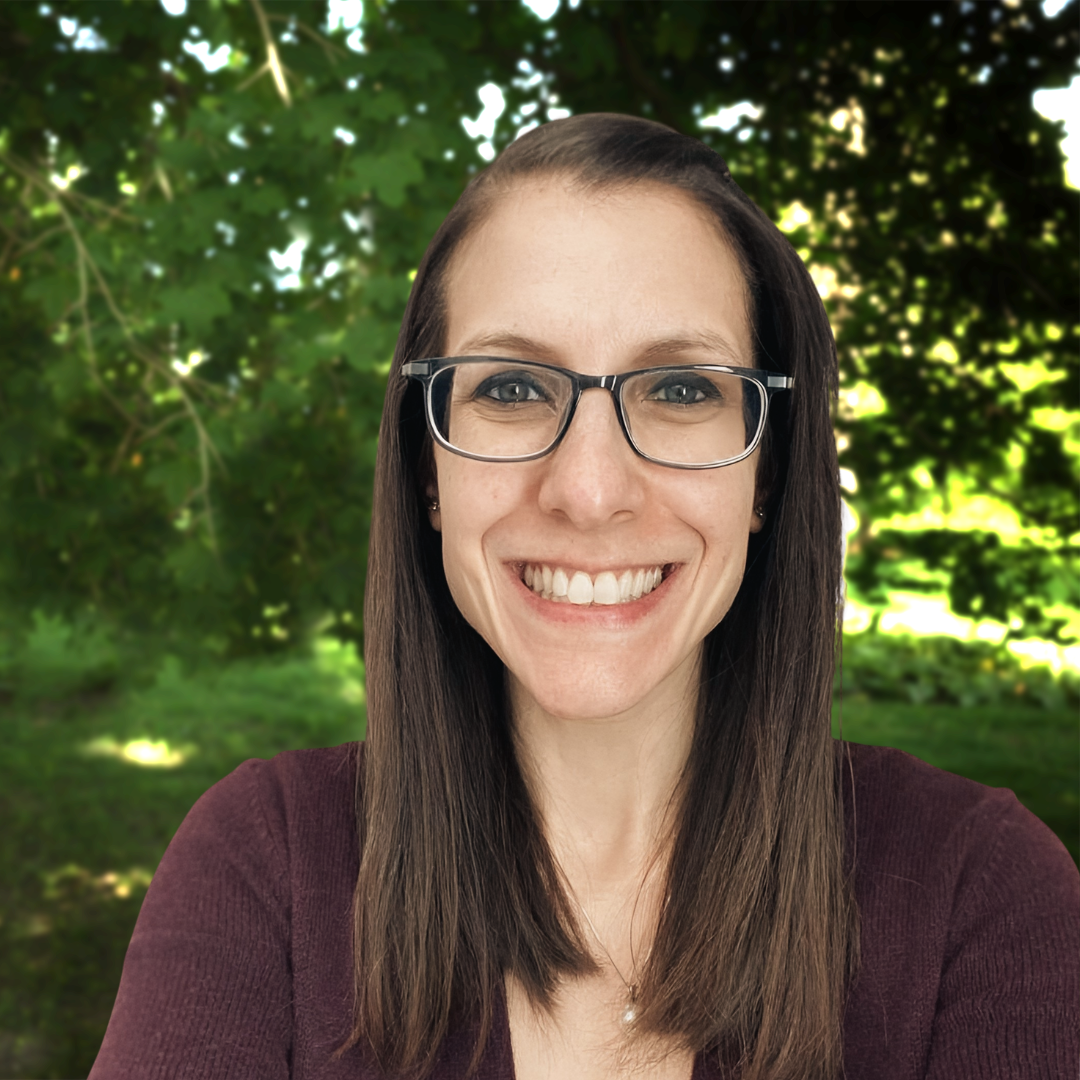
From mid-2014 until mid-2026, I lived on unceded Algonquin Anishinaabeg land, on the far west side of Pembroke, Ontario, about 10 km from the Petawawa military base. The base was a common destination for my long runs and the site of my son's indoor soccer leagues. In a community without many public recreation centres or pools, it was where we went in the cold winter months for movement, a change of scenery, and chance encounters with our neighbours. Close friends in Pembroke “worked on base,” and I’ve lost track of how many times I was asked, “Did you move here because you’re military?”
My professional work involves organizing and supporting cross-sector partnerships, many of which included the armed forces.
The confluence of these experiences showed me what we gain when we see the shared goals and complementary assets of “military” and “community.”
What defence protects
For years, when I heard the word “defence,” I pictured gated campuses, camouflage, Chinooks, and geopolitical threats.
A study of the origins of the word pointed to something much broader: refuge, protection, and safety. The conditions that allow people and communities to see, plan for, and withstand what threatens them, together.
By this definition, local communities are a form of defence. They protect against systems that isolate, extract, and oppress. Because people in local places know one another, communities save lives in our new baseline of wildfires, floods, and heat domes. They make sure accurate information circulates. And they sustain the school councils, mutual aid groups, neighbourhood associations, and rigorous cross-sector partnerships that hold a place together.
A country’s ability to absorb disruption without depending on others isn’t only about military or industrial capacity. It also depends on whether communities have the relationships, knowledge, and local capacity to respond when formal systems are disrupted. A country with sophisticated national infrastructure can still be vulnerable if people are isolated, trust is low, or local coalitions can't mobilize.
Canada's defence policy - Our North, Strong and Free - partly recognizes this. It calls for a Canadian Armed Forces that’s able to assist civil authorities during natural disasters and emergencies, and for deeper collaboration with Indigenous partners and Northern communities.
It speaks to the opportunity to extend beyond the institutions we traditionally understand as “defence.”
A shared destination
From many angles, our military and social sectors point toward the same destination. We all want people to be safe. We all want communities where people experience belonging and peace. We all want people to have enough. We all want children to grow up with opportunity. We all want communities that can withstand shocks and recover when things go wrong.
As the federal government confronts the changing nature of war, leaders familiar with the impact of community-driven change are asking how organizations focused on social impact can help defence, and what the military can do for communities.
I'm curious about other questions, too. What capabilities does a resilient society need, and who is best positioned to provide them? What conditions can we create together so that people (and the institutions accountable to them) work together toward resiliency?
These questions move us away from institutions as separate actors delivering things to one another, and toward the result we’re trying to create together. They move us past “the military helps the community” or “the community supports military families,” and toward structures that bring military, business, government, education, youth, Indigenous leaders, and others together around a set of strategies designed for safety, security, and prosperity for all.
They move us back to making decisions based on the concepts of reciprocity, interdependence, and sharing. Indigenous communities have organized around these values since time immemorial, and the Truth and Reconciliation Commission’s Calls to Action call those of us running institutions to enter communities not as helpers but as partners, mindful of existing relationships, histories, rights, and systems of governance.
Community capacity is national defence capacity
At Tamarack, our work is about helping people who live together in a place come together around problems no single human, institution or coalition can solve alone.
Poverty. Housing. The inequitable toll of floods, heat domes, and fires on people already made vulnerable. Community well-being. Economic development. Belonging.
These are moral, social and equity issues, but they are also part of our defence infrastructure.
A community where people know one another is more resilient than one where they don’t. A community where information travels through trusted relationships is more resilient than one where people are isolated and vulnerable to misinformation. A community where people have enough to weather a shock is more resilient than one where they are economically precarious . A community where people believe they have agency is more resilient than one where people feel everything important is decided somewhere else.
And a community with strong relationships across government, business, civil society, Indigenous governments, and community organizations has more capacity to respond to the unexpected.
Domestic resilience is a distributed capability. It lives in neighbourhoods, community organizations, volunteer networks, Indigenous and Northern communities, faith communities, cultural organizations, mutual aid networks, and social enterprises. The armed forces brings capabilities that communities can’t, but communities hold capabilities that centralized institutions can’t easily create in the middle of a crisis.
The community collaboratives with which Tamarack partners may not have billion-dollar budgets, emergency-response equipment, or military expertise. But they have trusted relationships with seniors, newcomers, youth, people experiencing poverty or housing insecurity, people with disabilities, Indigenous communities, and others whom formal institutions often struggle to reach. They know who is isolated, who needs translation, and who can gather and mobilize people. And in a time of misinformation and polarization, they offer trusted places for people to test information and make sense of uncertainty.
They do some of their most important work before an emergency. And they connect scales: they operate locally but belong to regional, national, and issue-based networks, so they can carry information and foster interactions across scales.
Above all, they engage people as participants in resilience, not just recipients of assistance. Finland’s comprehensive security model is grounded in this strategy, treating individuals’ knowledge, skills, and functional capacity as foundations of societal resilience.
Toward defence as trust, agency and local civic engagement
Canada is already experimenting with this kind of collaboration. In Petawawa and elsewhere, the military is often part of direct services infrastructure. In community collaboratives in Manitoba, military leaders sit at cross-sector tables alongside educators, parents, businesses, health providers, faith leaders, government, and residents, contributing to aligned efforts to improve economic mobility, reduce poverty, and strengthen well-being.
Next, we could create more structured ways for the armed forces, the Department of National Defence, and local communities to understand one another’s capabilities. We could test ideas locally, rather than designing them centrally. We could build shared protocols, relationships, training, and communication channels that can be activated in emergencies. And we could judge these experiments by whether they build local capacity to defend.
Seeing the whole system
Floods, fires, extreme heat, housing insecurity, the affordability crisis, and misinformation all land in places. A resilient country rests on strong military strategy and on strong communities, which need investment in the relationships, organizations, and forms of local agency that make resilience possible.
If we define defence only as protection from external threats, communities look peripheral to it. But if we define national security as inclusive of a society’s ability to withstand, adapt to, and recover from disruption, communities are essential.
We don’t need to replace military capability with community development, or to work out what one institution can do for another. We need to see and connect the whole system, and ask: What kind of country are we trying to create, and what would we need to build, in our communities and our institutions, to make that country possible?
If you’re working on this - in a community, from a municipality, in a Military Family Resource Centre, in a federal department, or from any other location - we’d love to hear what you’re learning.
If you’re curious to learn more, check out this webinar recording that the Canadian Science Policy Centre hosted recently with Tim Draimin, Rahim Rezaie and David Waters from the Institute for Collaborative Innovation, Gwendolyn Joy with Social Innovation Canada, Geraldine Cahill with UpSocial Canada, Sara Lyons with Volunteer Canada, and me. They are among the many other community-driven leaders committed to these ideas. I learn a ton from them: The Role of Social Sector Organizations in National Defence & Resilience - CSPC
Learn more
-
Explore Belonging as Essential Social Infrastructure to learn more about how belonging strengthens communities and supports social connection.
-
Read The Four Actions to Create an Asset-Based World, which highlights the heart of ABCD: recognizing community strengths and working with communities rather than for them.
-
Explore The Context Experts, which reinforces the importance of meaningful engagement and recognizing the knowledge and expertise of people with lived experience.