Based on a conversation with Colectiva Polea, interviewed by Erika Massoud and Chúk Odenigbo at the Tamarack Institute, this article is part of a series reflecting on the experiences of groups who participated in the Community of Practice for Collective Climate Transitions (CPCCT), organized by the Tamarack Institute in partnership with the Foundation of Greater Montreal.
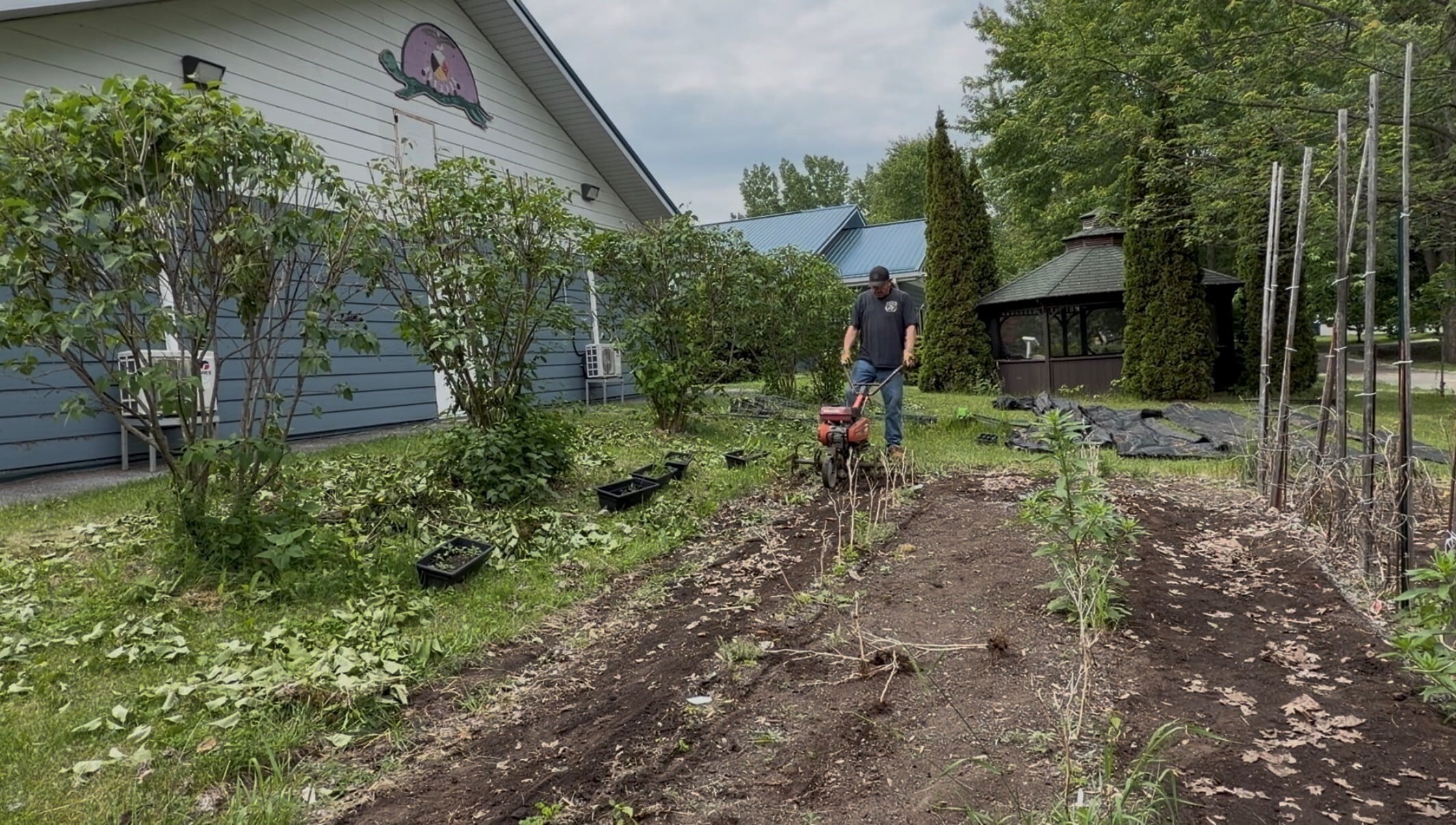
Since 2023, Colectiva Polea has been developing an approach in which arts & crafts, new technologies, and socioecological conversations become ways of meeting, practicing collective care, and putting down roots. Led by Karina Arbelaez, Tania Lara Casaubon, and Javi Fuentes Bernal, three artists with South American backgrounds based in Montreal, the collective creates spaces where people can build relationships, reflect on their relationship with the land, and take part in creative processes that connect environmental issues with social, cultural, and migration realities.
The collective’s name, “polea,” which means pulley in Spanish, captures the spirit of their work: facilitating movement, connecting worlds, and setting in motion forces that might otherwise remain isolated. In their words, Colectiva Polea does not act as a group that “teaches” something to someone, but rather acts as a catalyst. The collective brings together people, materials, stories, and questions to see what can emerge from those encounters.
Creating Spaces for Encounter and Co-Creation
Colectiva Polea’s mission is to create spaces for encounter and dialogue on environmental and migration issues through art and craft. These spaces are intended especially for immigrants and people with immigrant backgrounds, so they can develop a sense of belonging and put down roots in their host territory in Montreal.
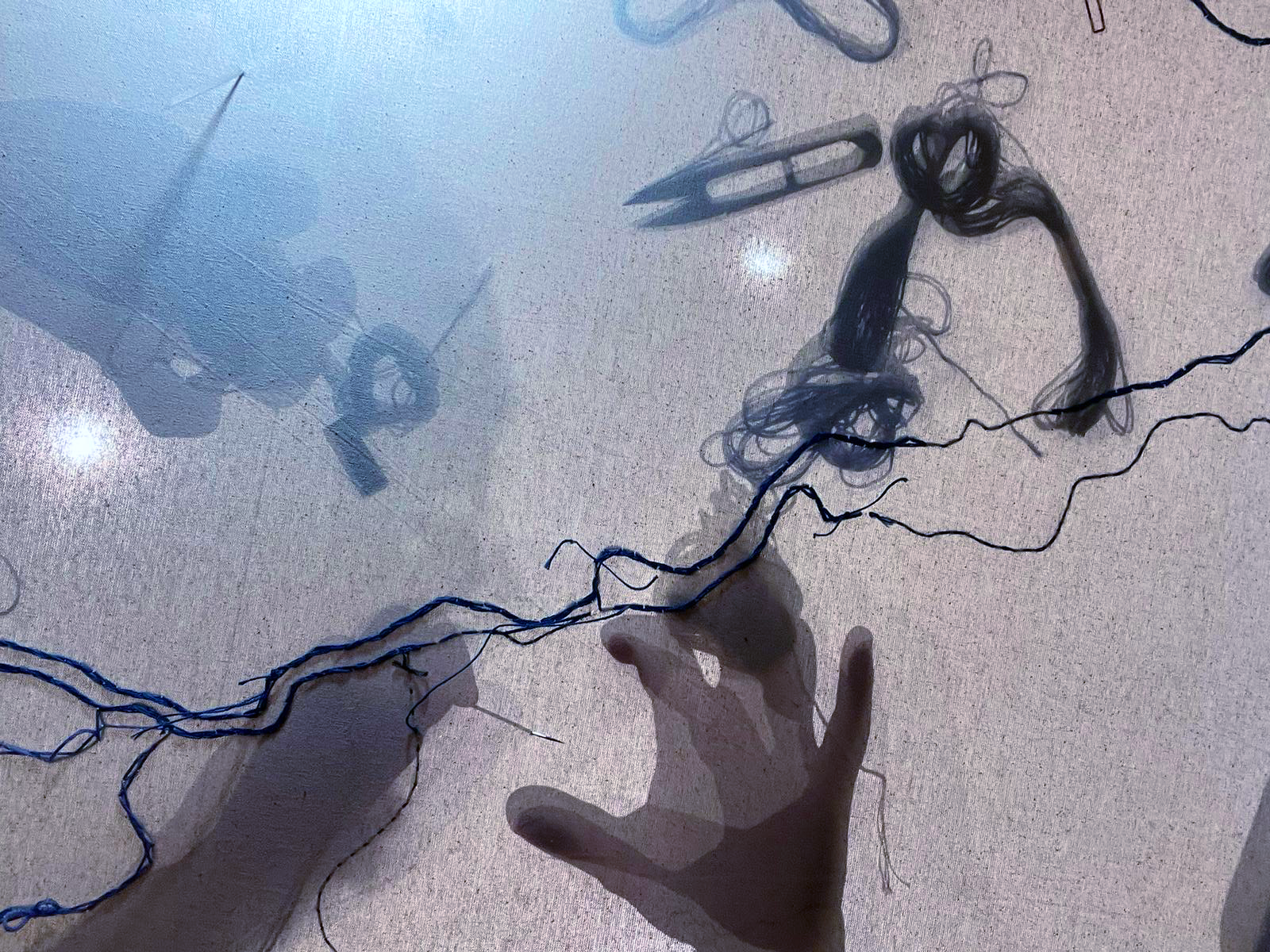
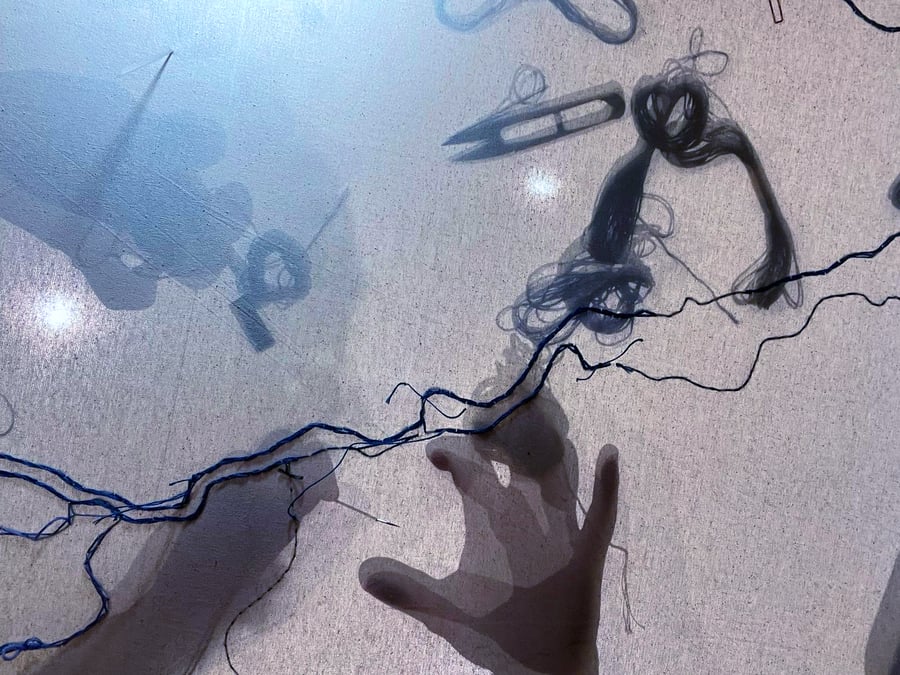
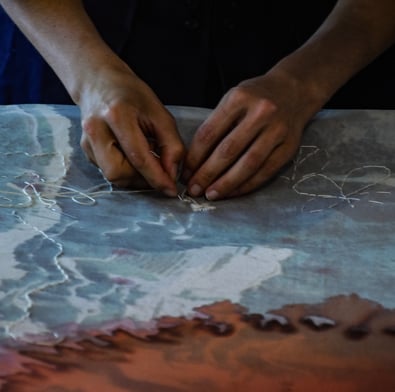
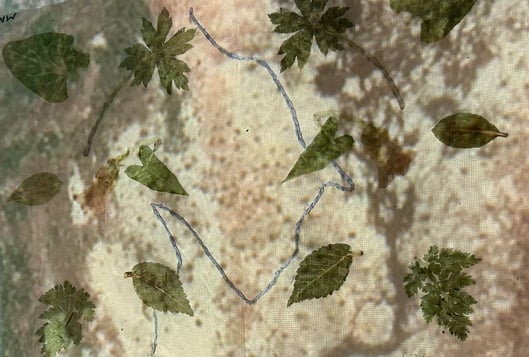
The workshops are designed as co-creation spaces where participants’ voices are prioritized and where conversation is built together. The materials used in the workshops—threads, fabrics, natural dyes, and plants—become supports for reflecting on relationships between humans and the land, as well as on questions of belonging, land, and environmental grief. These workshops are living spaces where artistic creation and deep reflections on the state of the world meet.
The workshops respond to an important need. Beyond therapeutic spaces or support services offered by many community organizations, many people are looking for creative activities that are informal and collective: spaces where they can learn a technique, create something with their hands, eat together, listen to music, talk, and form new friendships.
For Colectiva Polea, these spaces are essential. They break isolation and interrupt the routines of people who work a great deal and sometimes have limited social networks. Especially for newcomers, these spaces become a concrete way to “put down roots,” imagine their place on this land, and build connections.
Why Art Is Political in Socioecological Transition
The sector working on ecological transition is often not representative of the city’s cultural diversity. According to the collective, reflecting on ecological crises can sometimes be perceived as a luxury or privilege, even though migrants are often among those most affected by the impacts of environmental or sociopolitical crises.
Colectiva Polea’s work therefore aims to amplify these voices. It is not only about offering artistic workshops, but about creating spaces where immigrants can participate in socioecological conversations from their own experiences and stories. Collective creation, especially repetitive crafts such as embroidery, allows for a unique kind of intimacy and reflection, leading conversations to become deep and to address issues of memory, belonging, loss, transformation, and the future.
This intersection between creation, reflection, and collective life is one of the collective’s strengths. The goal is not to reach a final product, but rather to create the space itself and what that space makes possible: conversation, relationship, and collectivity.
What the Community of Practice Made Possible
Colectiva Polea’s participation in the Community of Practice for Collective Climate Transitions was a nourishing experience. The collective found concrete tools, particularly around evaluation, and had the opportunity to clarify their mission and objectives, as well as participate in a space of trust. The collective highlighted the importance of providing support that offers both autonomy and guidance: a rare balance between trusting groups and giving them resources to move forward.
The community of practice also encouraged the circulation of ideas and contacts among groups, and collaborations began to take shape. It was an opportunity to expand their network and turn certain challenges into opportunities.
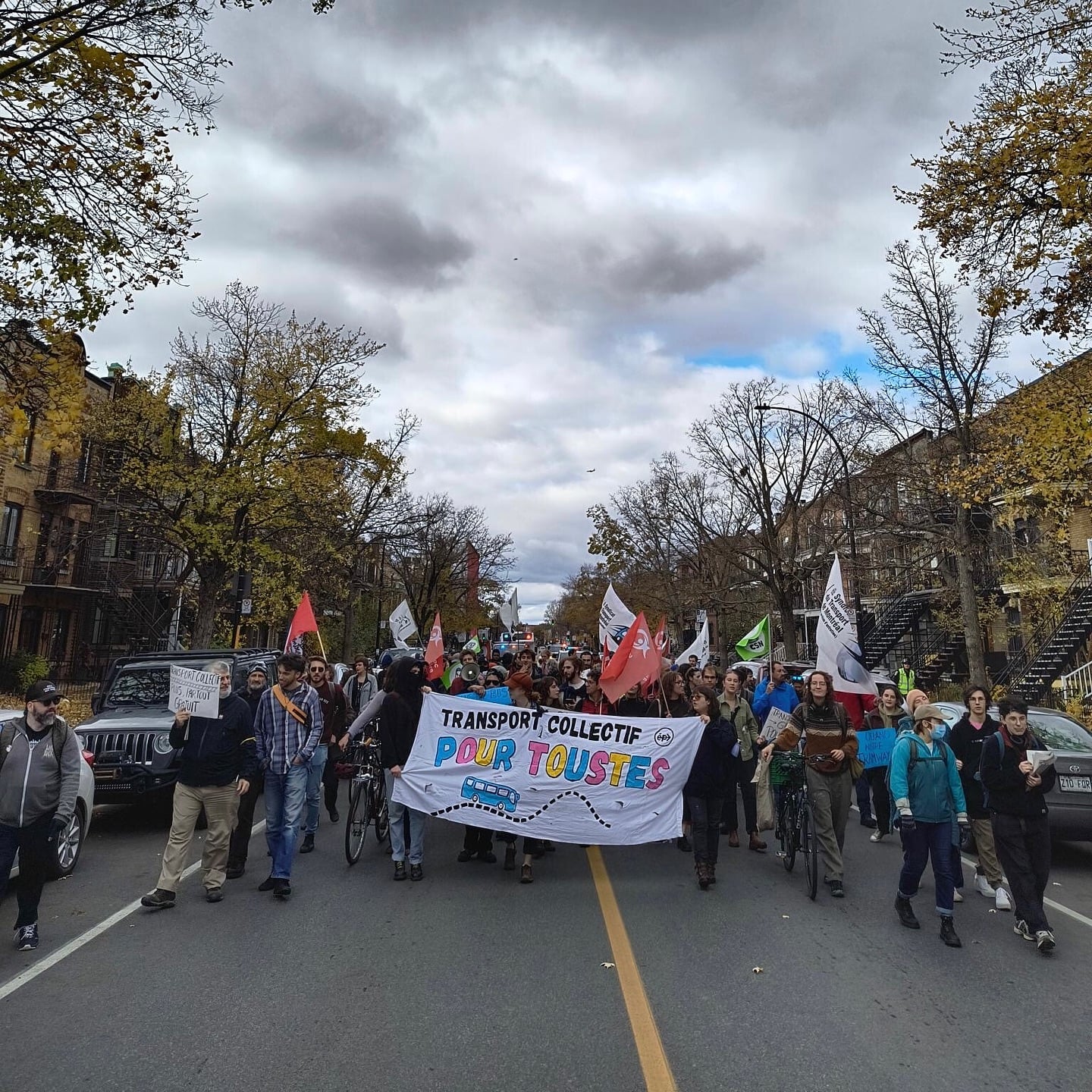
According to Colectiva Polea, citizen movements need a variety of spaces to carry out their activities: physical spaces to gather, create, and welcome people; trusted spaces to reflect together; and spaces for connection. Municipalities, foundations, and well-established organizations can play a role in creating these meeting spaces to foster connections among groups.
Solidarity among struggles is both a necessity and a source of energy, according to Colectiva Polea. Being in contact with other groups engaged in environmental, social, or community struggles allows them to move out of isolation, broaden their horizons, and feel nourished by other practices. This solidarity also affects well-being. In a world marked by crises and a sense of collective exhaustion, meeting other people who are taking action and are anchored in similar values is a reminder that no one is alone.
What Comes Next for the Collective
Colectiva Polea hopes to continue offering a range of workshops while exploring collaborations elsewhere in Montreal and beyond. For the collective, the goal is not to one day arrive at a definitive formula, but to remain in motion, learn with participants, and allow practices to evolve through relationships. They will continue to deepen their territorial grounding in Montreal’s Parc-Extension neighbourhood, particularly with the organizations AGIR and Brique x Brique.
The collective also hopes to develop a research component. Members note a lack of writing at the intersection of art, social work, ecology, migration, and belonging, particularly in North American, francophone, and multilingual contexts. In the fall 2026, they will publish their first article, Affective and Decolonial Counter-Cartographies: Textile, Botanical, and Care Practices with Queer Diasporas in Montreal, which they will present in Paris as part of the conference Trouble in Cartography: Counter-Cartographies and Paradigm Shifts. Their ambition is to contribute to these conversations and circulate knowledge among communities, territories, and academic circles.
Through all of this, Colectiva Polea continues to play its role as a pulley, enabling migrant communities to weave connections and carry their challenges together.
Learn More
-
Visit Colectiva Polea’s website (in French only)
- Follow Colectiva Polea on Instagram
Our Approach to Artificial Intelligence
Tamarack uses artificial intelligence thoughtfully to support aspects of our work while maintaining human oversight, community voice, transparency and accountability. We are committed to being transparent about how we use AI, where we choose not to use it, and the tensions we are navigating as these technologies evolve.