
récits du Fonds d’action intersectorielle
Le Fonds d’action intersectorielle (FAI) est un programme de subventions de l’Agence de la santé publique du Canada (ASPC). Le fonds soutient la capacité des communautés à mener des actions intersectorielles en amont sur les déterminants sociaux de la santé, afin d’améliorer la santé de la population, de réduire les inégalités en matière de santé et de renforcer la résilience des communautés.
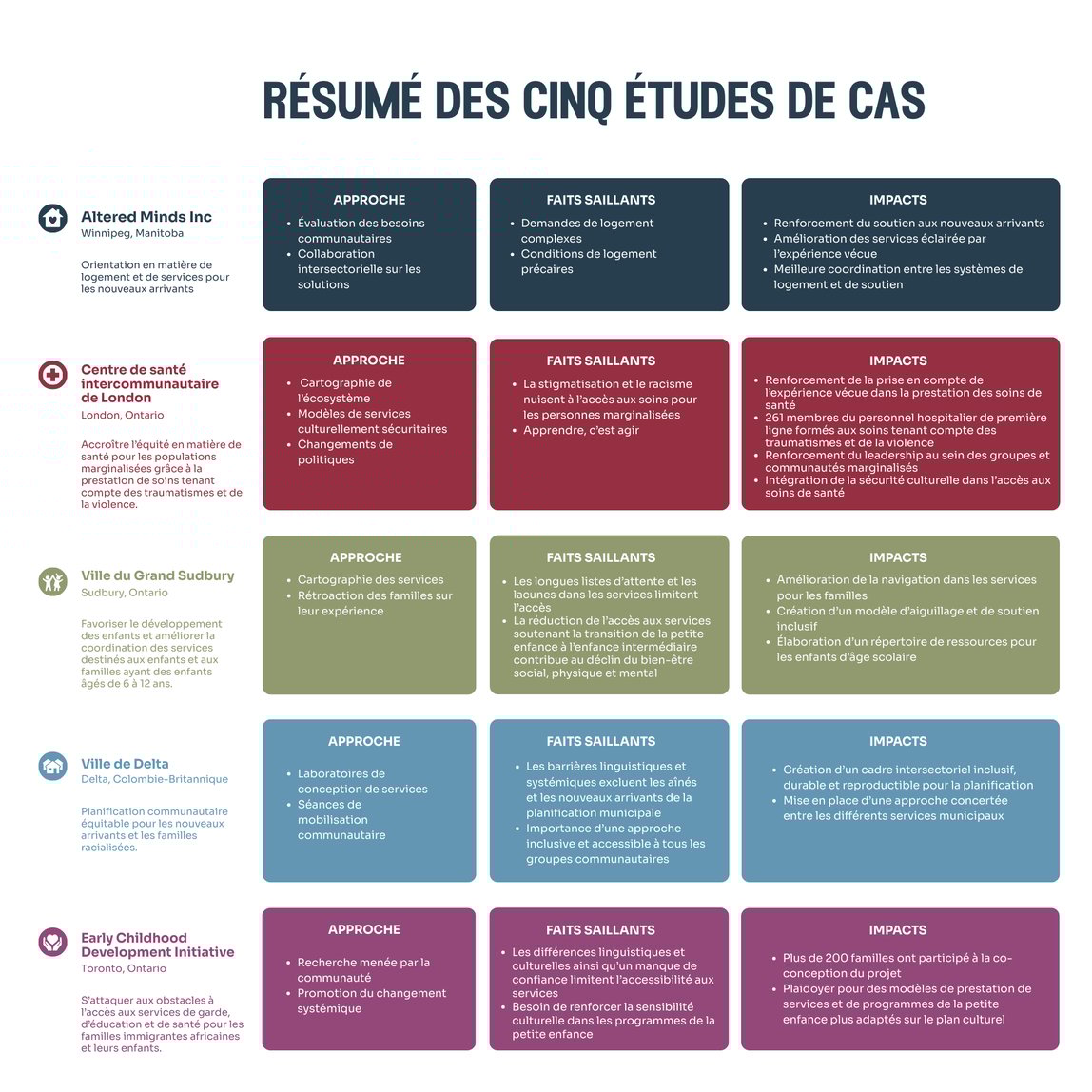
Treize projets faisant partie de la cohorte de financement 2022-2023 du FAI, et cette série d’études de cas met en valeur les résultats et les apprentissages issu de cinq projets de cette cohorte. Chaque projet finance par le FAI a mobilisé une diversité d’intervenants – notamment des organismes communautaires, des agences gouvernementales, des entreprises locales, et des personnes ayant une expérience vécue – afin d’élaborer collectivement un programme d’action commun pour répondre à un enjeu urgent de santé publique. Cette approche a permis la mise en œuvre de solutions locales adaptées à une variété de priorités de santé complexes, tout en favorisant des changements systémiques durable.
Collective Impact (CI) – un cadre éprouvé pour la collaboration multisectorielle – a servi de modèle de base pour les treize projets qui faisant partie du groupe de financement 2022-2023 du FAI. Chaque projet nécessitait une coordination entre divers secteurs afin de s’attaquer à des enjeux de santé complexes ayant une incidence sur l’équité en santé et le bien-être. Les cinq conditions du cadre CI – un programme commun, des mesures partagées, des activités se renforçant mutuellement, une communication continue et une infrastructure de soutien – ont créé un environnement propice à l’action communautaire et à la mise en œuvre d’initiatives intersectorielles significatives.
La mise en œuvre de solutions innovantes exige de la créativité et du courage. Nous saluons ces projets qui partagent leurs précieuses expériences et leurs connaissances au profit de toutes les communautés.